Dyscalculia Specialist
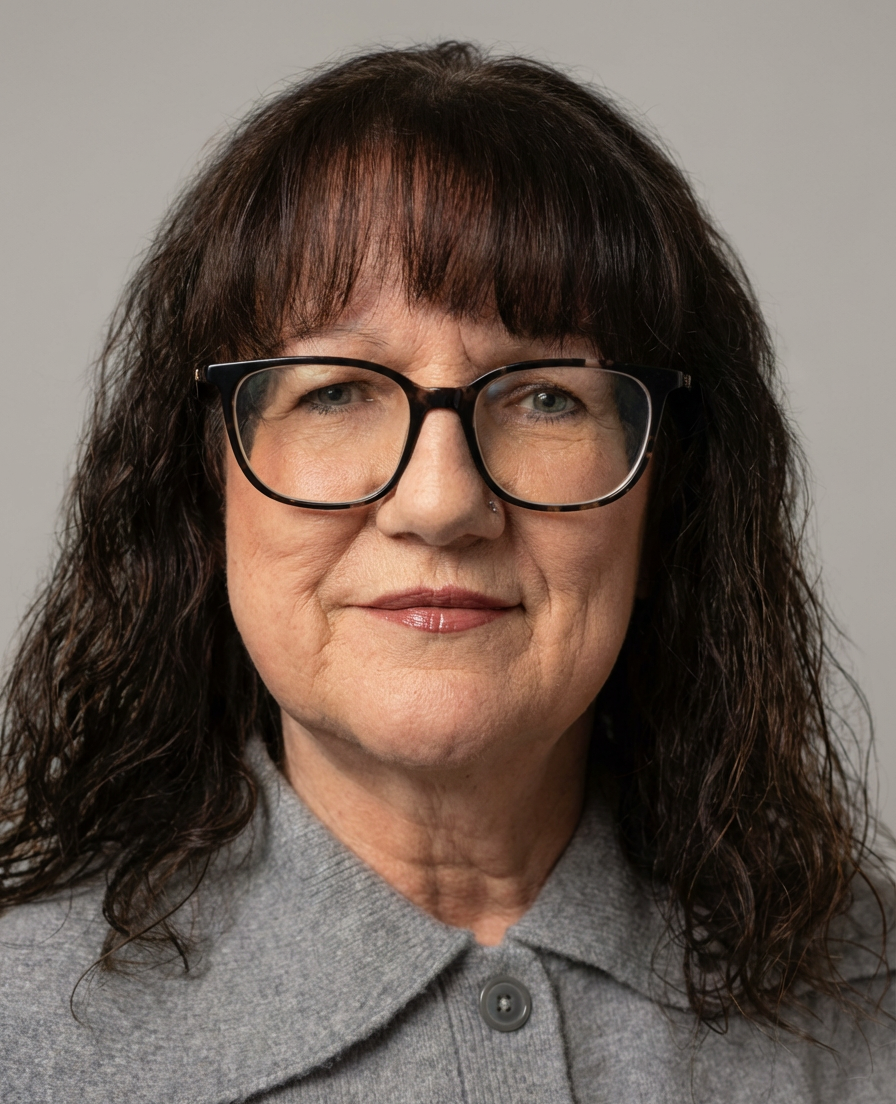
I am a specialist assessor and teacher based in Doncaster, South Yorkshire dedicated to helping children and adults overcome the barriers associated with dyscalculia and numeracy difficulties.
My background offers a unique perspective in this field. With a BSc in Psychology and an MSc in Computing for Commerce and Industry, I combine a deep understanding of cognitive processing with the technical logic required for modern mathematical applications. This allows me to see the “full picture” of how a learner’s brain interacts with numbers, data, and complex systems.
I hold the highest level of professional recognition in the field, ensuring my assessments and tuition meet the rigorous standards required for formal support:
Assessment Practicing Certificate (APC): This is the gold standard for assessors; it ensures my diagnostic reports are formally recognized by schools, universities (for DSA), and employers.
Level 7 Specialist Assessor: Qualified to the highest post-graduate level to diagnose specific learning difficulties.
Level 3 & 5 Dyscalculia Specialist Teacher: Specifically trained to bridge the gap in numeracy learning for all ages, from primary through to adulthood.
PCGE & PgCert in Mathematics: As a qualified teacher with postgraduate mathematics credentials, I have a professional understanding of the curriculum and how to adapt it for diverse learners.
For your peace of mind, I hold full professional indemnity insurance and a current, enhanced DBS clearance.
I don’t believe in a “one size fits all” approach to numeracy. Whether I am providing GCSE tuition or a Full Diagnostic Assessment, I use my psychological and mathematical background to identify exactly where the “block” is occurring. My goal is to provide a clear, jargon-free roadmap that turns your unique cognitive strengths into practical, real-world skills.
Being based in Doncaster allows me to provide both in-person and remote services to the local community and beyond. As a solo practitioner, I am your single point of contact. This ensures a consistent, high-quality experience where you are treated as an individual, not just a file. From our first consultation to the final report, I am here to support you or your child every step of the way.
While I am a specialist assessor for dyscalculia, I offer dyslexia screening to help clients identify their wider learning profile and access appropriate diagnostic pathways.
Dyscalculia is a lifelong neurodivergent condition that makes it significantly harder to learn and perform even basic mathematical tasks. While everyone struggles with a difficult equation now and then, someone with dyscalculia faces a daily barrier when dealing with numbers.
Common signs include:
Difficulty subitising (recognising how many items are in a small group without counting them one by one).
Struggling to remember basic math facts, such as times tables or simple addition.
Challenges with “everyday” maths, such as telling the time on an analogue clock, handling change, or estimating distances.
High levels of “maths anxiety” or a feeling of panic when faced with numerical tasks.
Difficulty understanding place value (e.g., seeing the difference between 105 and 150).
Not everyone can legally diagnose dyscalculia. To provide a report that is accepted by Student Finance England (for DSA), the DVLA, or employers, the assessor must hold an Assessment Practicing Certificate (APC).
Achieving this requires years of post-graduate study (Level 7) and ongoing, expensive professional development to maintain the license.
You are paying for a “gold standard” qualification that ensures the report has legal standing.
While the face-to-face testing usually takes around 3 to 4 hours, that is only a small fraction of the work involved. For every assessment, I typically spend 12 to 15 hours in total:
Pre-assessment: Reviewing school reports, medical history, and initial questionnaires.
The Assessment: 3 to 4 hours of 1-to-1 clinical observation and standardised testing.
Analysis: Scoring the tests against national norms and identifying specific cognitive patterns.
Report Writing: Crafting a bespoke, 25 plus page formal report that details the findings and provides specific, actionable recommendations for the future.
The “tools of the trade” are incredibly expensive. Specialist psychometric testing batteries cost thousands of pounds to purchase and require paid “per-use” protocols for every single client. These are not basic worksheets; they are scientifically validated instruments that must be kept strictly up to date.
As a solo practitioner, the fee also covers the essential “behind the scenes” costs that keep the practice safe and legal:
Professional Indemnity Insurance (essential for diagnostic work).
Data Protection (ICO) compliance to keep your sensitive medical/educational data secure.
DBS checks and room hire.
Unlike a tutor session which addresses a temporary hurdle, a Full Diagnostic Assessment is a “once-in-a-lifetime” document. It provides:
Access to Extra Time (25%) and assistive technology in exams.
Evidence for Workplace Adjustments via Access to Work.
A clear psychological understanding of why certain things are difficult, which often brings immense emotional relief and a boost in self-confidence.
My goal as a specialist is to ensure that your investment results in a document that opens doors, whether that’s in a classroom, a university lecture hall, or a professional office in Doncaster. It isn’t just a diagnosis; it’s a roadmap for your or your childs entire future.
It is a common source of frustration for parents, especially when a child is clearly struggling. The simple answer is that while schools are excellent at identifying that a child is “behind” in maths, most do not have the specific staff or legal remit to provide a formal clinical diagnosis of dyscalculia.
Here is why schools in the UK typically cannot provide this assessment:
To diagnose dyscalculia, an individual must hold a Level 7 Specialist Assessor qualification and a current Assessment Practising Certificate (APC).
Most school teachers and even Special Educational Needs Coordinators (SENCos) are trained in general education, not in the high-level psychometric testing required for a neurodevelopmental diagnosis.
Schools generally focus on attainment (what a child can do) rather than cognition (how a child’s brain processes information).
Schools are often hesitant to label a child with dyscalculia because many children struggle with maths for other reasons, such as “maths anxiety,” gaps in prior schooling, or poor teaching methods.
A school’s job is to provide “Quality First Teaching” to try and close those gaps.
A specialist assessment (like the one I provide) is designed to strip away those external factors to see if there is an internal, biological difference in how the brain handles numbers.
In the UK, schools usually have a very limited budget for Educational Psychologists (EPs).
These rare EP visits are typically reserved for children with the most complex needs (often those requiring an Education, Health and Care Plan).
Because dyscalculia is often seen as a “specific” difficulty that doesn’t always affect a child’s safety or general behaviour, it rarely reaches the top of the school’s priority list for an expensive external assessment.
The UK Department for Education encourages schools to support a child based on their need, regardless of whether they have a formal label.
A school might give your child a number line or extra help in a small group, but they cannot give them a “Diagnosis of Dyscalculia.”
The Problem: Without that “label” or a formal report from an APC holder like myself, your child may struggle to get Extra Time (25%) in SATs/GCSEs or specialist support when they move to secondary school or university.
Many schools adopt a “wait and see” approach, hoping the child will “catch up” with standard interventions. Unfortunately, for a child with true dyscalculia, catching up without specialist, multisensory intervention is nearly impossible.
The Specialist Advantage: As an independent assessor in Doncaster, I fill the gap that the school system leaves behind. My reports are legally recognised documents that “force the hand” of the educational system, providing the evidence schools need to put formal Access Arrangements and targeted support in place immediately.
If your school says they “don’t recognise” outside assessments, remind them that under the SEND Code of Practice, they have a duty to consider all professional evidence provided by parents. My APC qualification ensures that my reports meet the necessary legal standards for exam boards and higher education.
A Dyscalculia Screener is a streamlined, targeted evaluation used to identify the specific cognitive markers associated with dyscalculia.
Think of it as a professional “early warning system.” While a full diagnostic assessment provides a legal label and an exhaustive 25 plus page report, the screener focuses on the essentials: is there a high probability of dyscalculia present?
High-Standard Testing: Unlike free online “quizzes,” I use the same professional psychometric tools found in a full diagnostic assessment.
Clear Indicators: It identifies whether challenges are likely due to a specific learning difficulty / dyscalculia or other factors like maths anxiety or gaps in schooling.
Personalised Recommendations: You receive a concise report of the findings along with practical strategies to implement immediately at home, school, or work.
A “Next Steps” Roadmap: If the screener indicates dyscalculia, I will advise you on the best path forward, whether that is targeted specialist tuition or “upgrading” to a full diagnostic report.
Please note that a screening profile is not a formal diagnostic report. While it is an excellent tool for understanding a learner’s needs and accessing immediate support, it cannot be used for official purposes such as Disabled Students’ Allowance (DSA) or legal workplace accommodations.
Specialist tuition is fundamentally different from standard “after-school” tutoring. While traditional tutoring focuses on repeating the school curriculum, my approach targets the underlying cognitive blocks that make numbers feel overwhelming.
We move away from abstract worksheets and rote memorisation. Using the Concrete-Pictorial-Abstract (CPA) method, I use physical tools and visual aids to help the learner “see” and “feel” how numbers work. This builds a genuine “number sense” rather than just teaching them to mimic a process they don’t understand.
With my background in Psychology, I focus heavily on reducing maths anxiety and building resilience. We identify your unique cognitive strengths, such as your verbal reasoning or visual-spatial skills, to find “workarounds” for areas of difficulty, like working memory or processing speed.
Every session is bespoke. Whether we are working toward a GCSE or building basic life skills for an adult learner, the pace is dictated entirely by you. There is no “falling behind”, we stay on a concept until it truly “clicks.”
Drawing on my MSc in Computing, I integrate modern assistive technology and software where appropriate. I teach learners how to use digital tools and logical frameworks to manage numbers in the real world, whether that’s in a classroom or a professional workplace.
In-Person (Doncaster): Sessions can be held in a dedicated, quiet learning environment.
Remote (Online): I use interactive digital whiteboards and multisensory software to ensure that online sessions are just as engaging and effective as being in the same room.
The Goal: I don’t just teach you how to do a sum; I teach you how your brain works with logic and data. We build a toolkit of strategies that stay with you long after the session ends.
All diagnostic assessments are conducted in person to ensure the highest level of accuracy and to meet the strict requirements of formal reporting. To provide a comfortable and professional environment, I offer the following options:
I have a quiet, private, and distraction free space specifically set up for assessment and tuition. This environment is designed to help both children and adults feel at ease, allowing us to focus entirely on the tasks at hand.
By prior arrangement, I can visit schools within the Doncaster and surrounding South Yorkshire area. Many parents find this convenient as the child is already in a “learning” mindset, and it allows me to briefly consult with the SENCo if needed.
In certain circumstances, I can conduct the assessment in the comfort of your own home. For this to be successful, we require a quiet room with a clear table, free from interruptions, pets, or background noise for the duration of the 3 to 4 hour session.
For adult learners, I can visit your place of employment. This is often particularly useful for Workplace Support or Access to Work requirements, as it allows me to see the environment where you use your numerical skills daily.
Please Note: While initial screenings, meetings and follow up strategy sessions can sometimes be conducted remotely via video link, the Full Diagnostic Assessment must be completed in person. This ensures that I can observe exactly how a learner interacts with the physical testing materials, a vital part of understanding their unique processing profile.
I primarily serve the Doncaster area, but I am happy to travel to nearby locations including Sheffield, Rotherham, and Barnsley.
Please note that a travel fee may apply for locations outside of a 5 mile radius of Doncaster.
Tutoring can be conducted in my dedicated, quiet office space in Doncaster, or I can travel to your home or your child’s school by prior arrangement if you are in the local area. I also offer remote screening and study support via secure video conferencing.
Preparing for a dyscalculia assessment is less about “studying” maths and more about gathering evidence of how you or your child processes numbers. Because these assessments measure underlying cognitive processes rather than just academic knowledge, you cannot “cram” for them.
Specialist assessors look for patterns over time. Collect the following to provide context:
Before the day of the assessment, ensure the following medical and administrative steps are complete:
Assessments typically last 3 to 4 hours.
Maths anxiety is a common factor explored during assessments. Reassure the person being tested that the goal is simply to find out “how” they learn, not to pass or fail.
I use widely recognised, standard tests to evaluate several key developmental areas
Unlike school exams, many specialists use manipulatives such as coins, dice, cubes, or number lines. The focus is on how you arrive at an answer—for example, whether you still count on your fingers or have difficulty with the “role of zero” and place value.
You will not receive a diagnosis on the day.
The Report: A detailed diagnostic report (often 25–30 pages) is provided within 2 to 3 weeks.
Feedback Meeting: A 30-minute follow-up session to discuss the findings, any formal diagnosis, and tailored recommendations for school or the workplace.